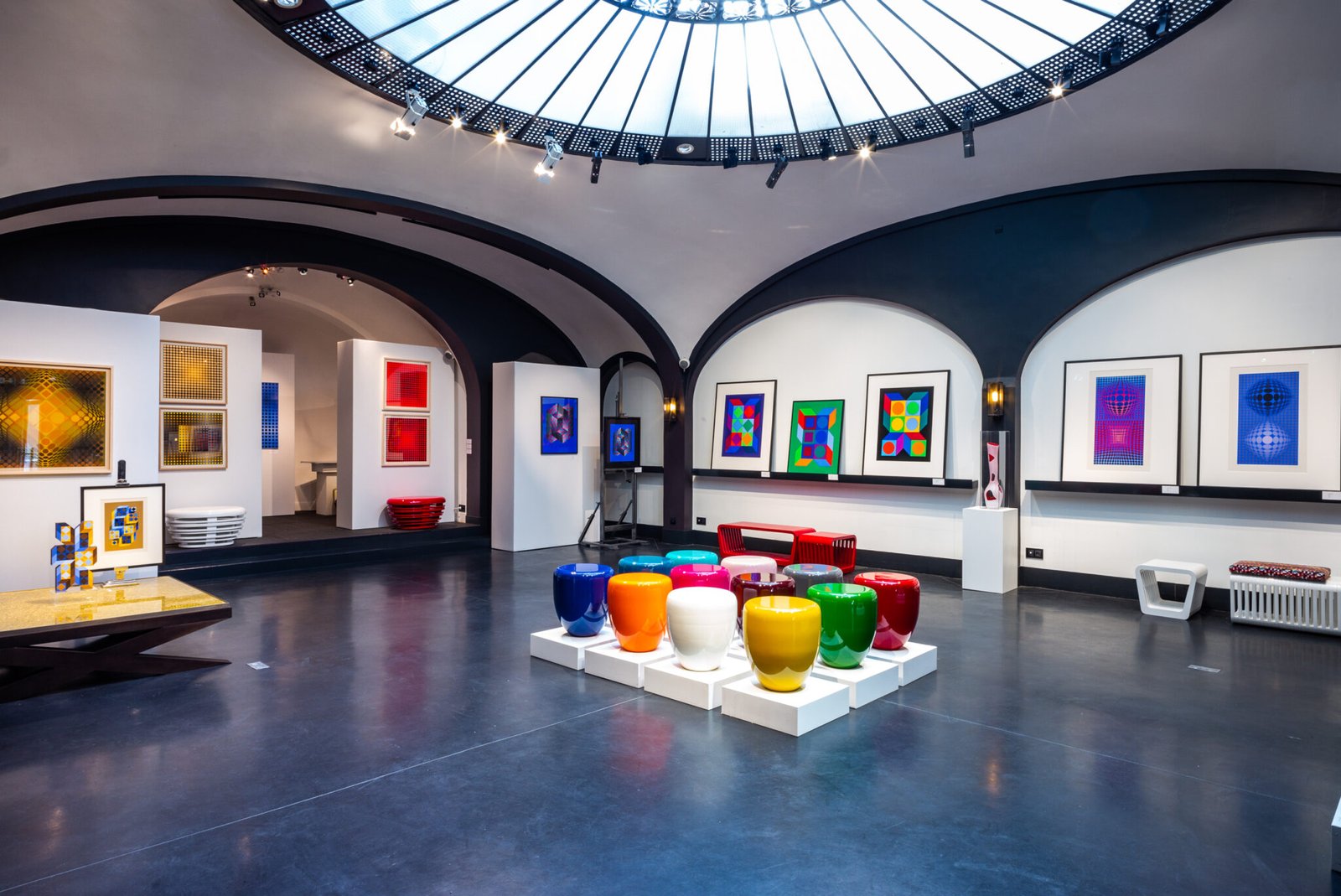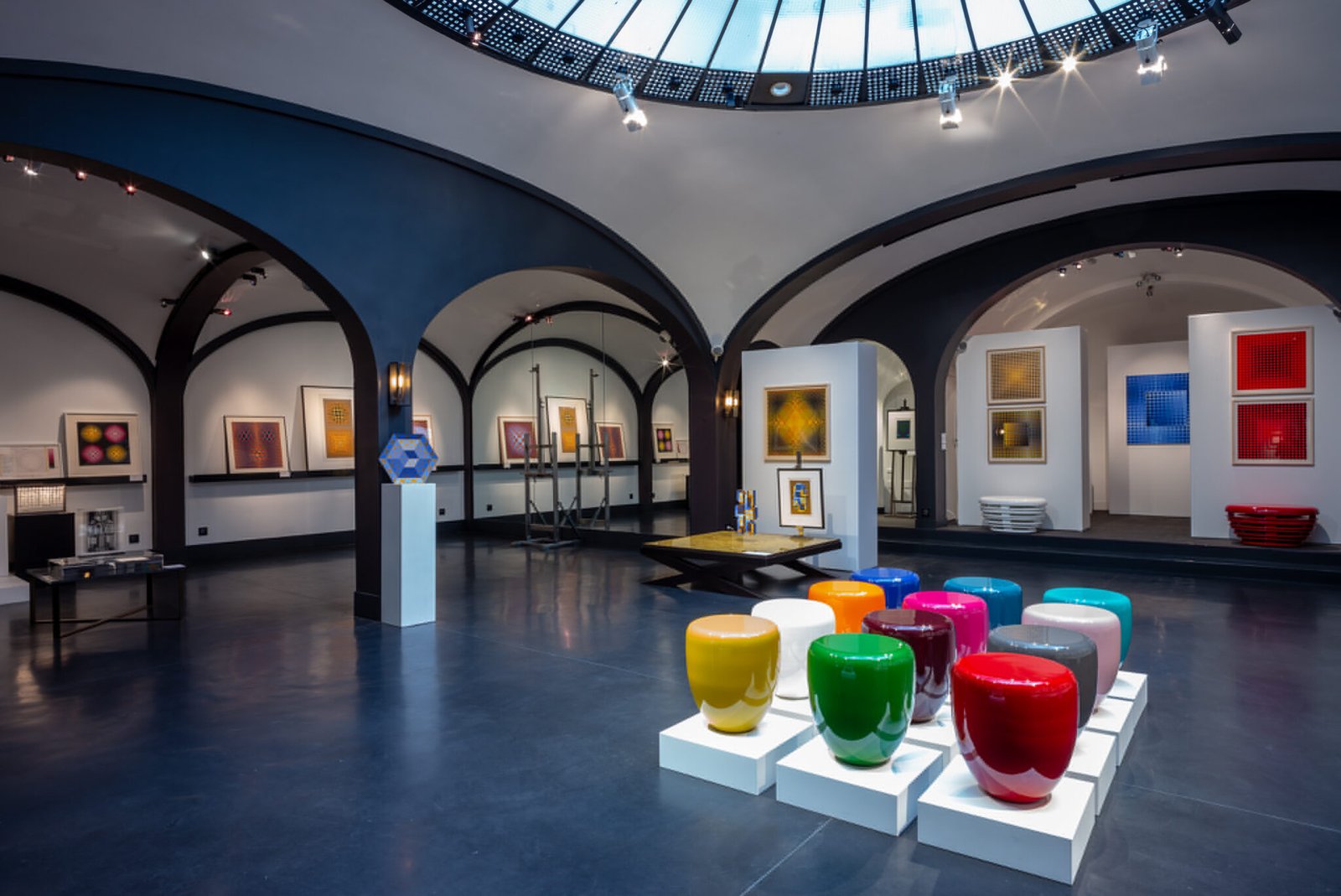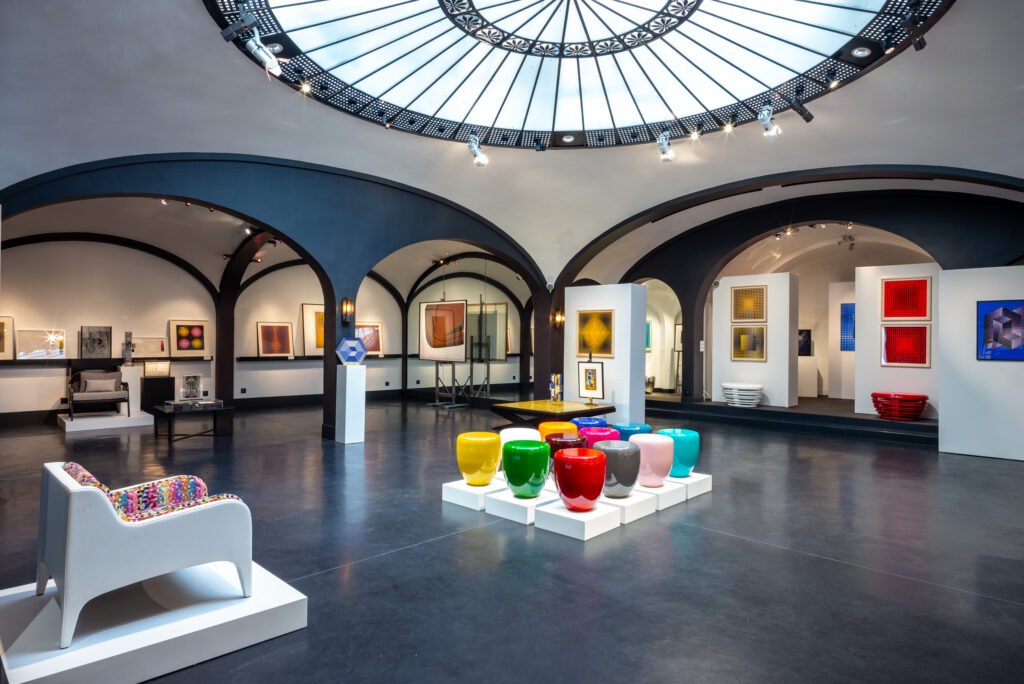

OP Art & Design, an exhibition of the works of Victor Vasarely, founder of Optical Art.
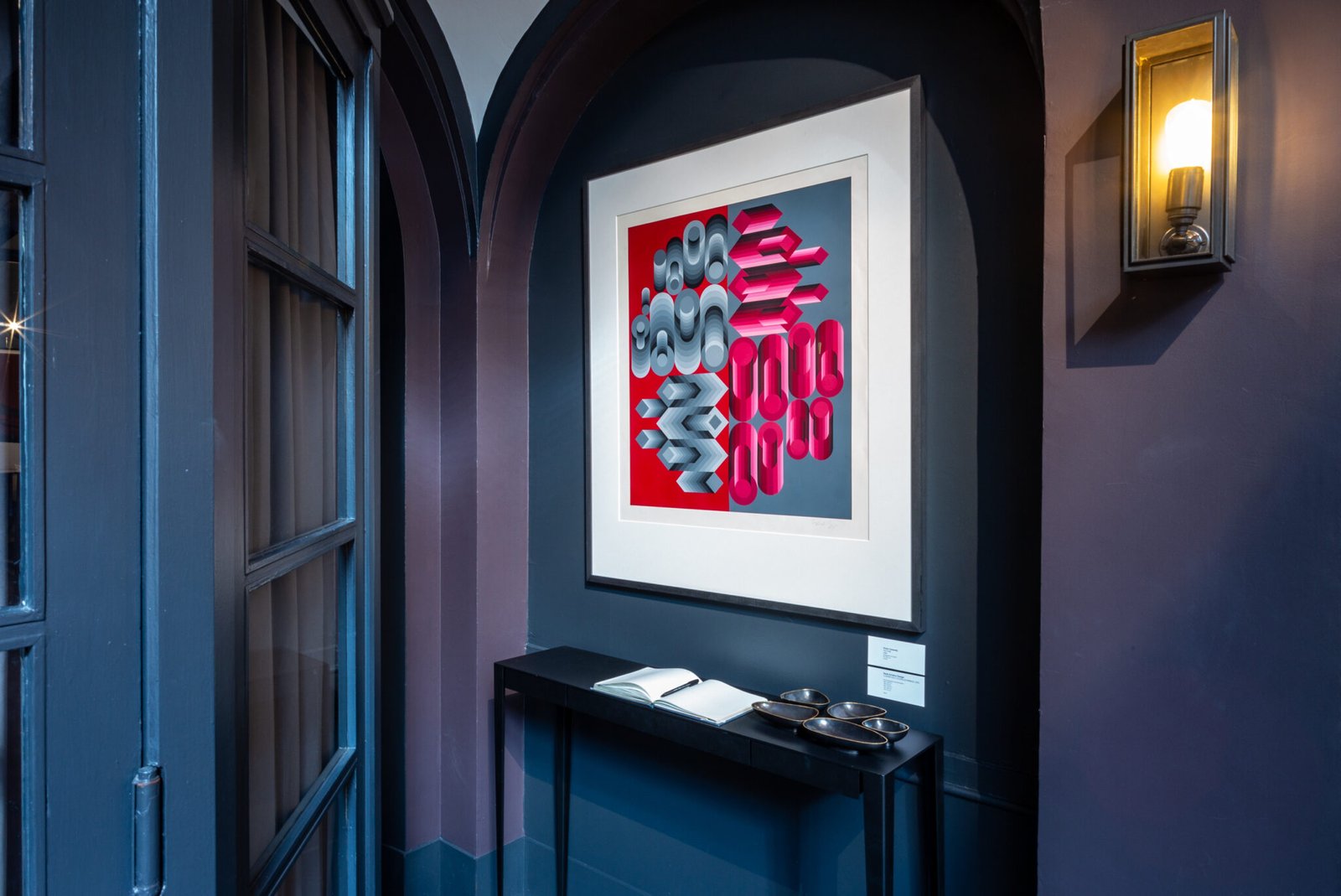
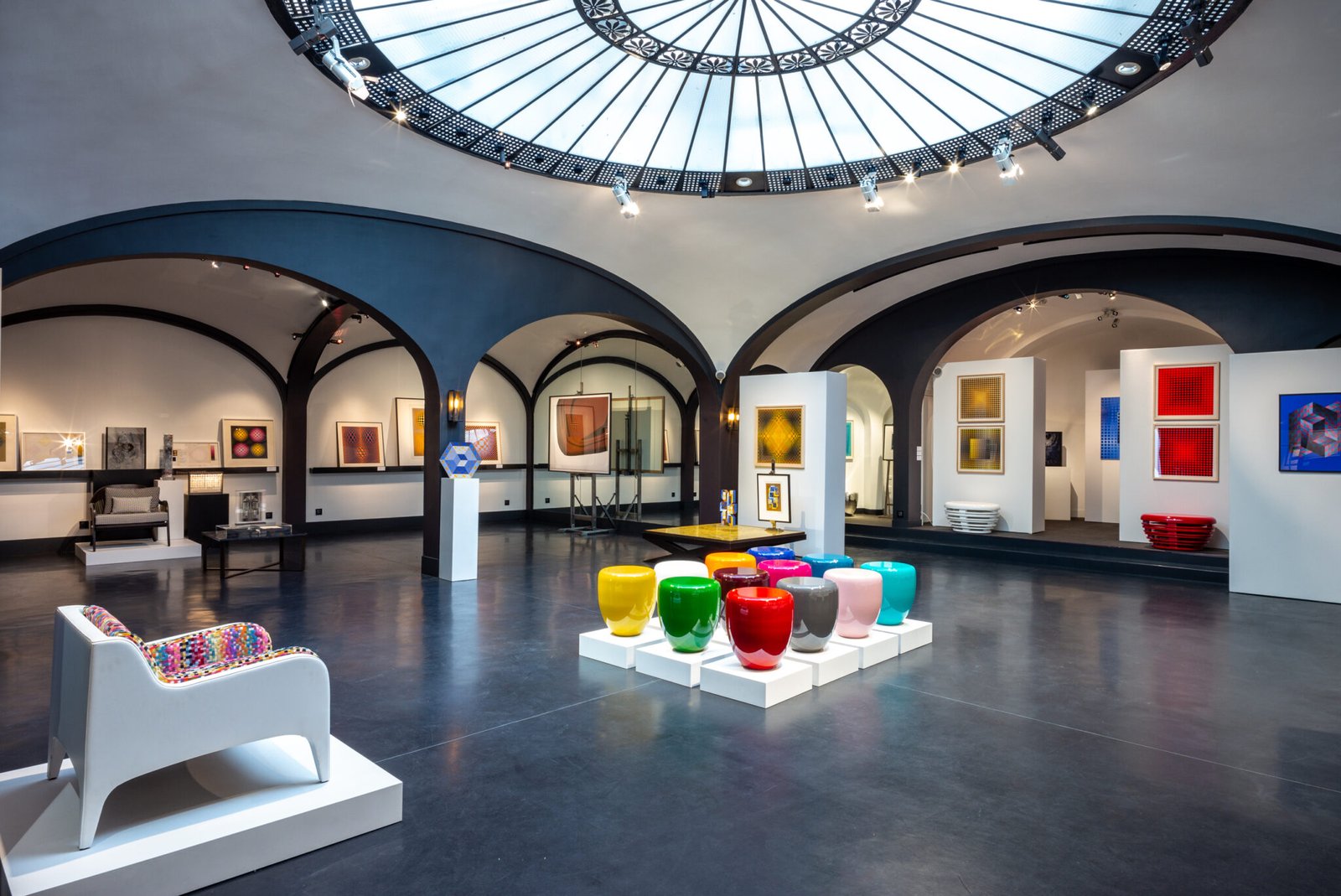
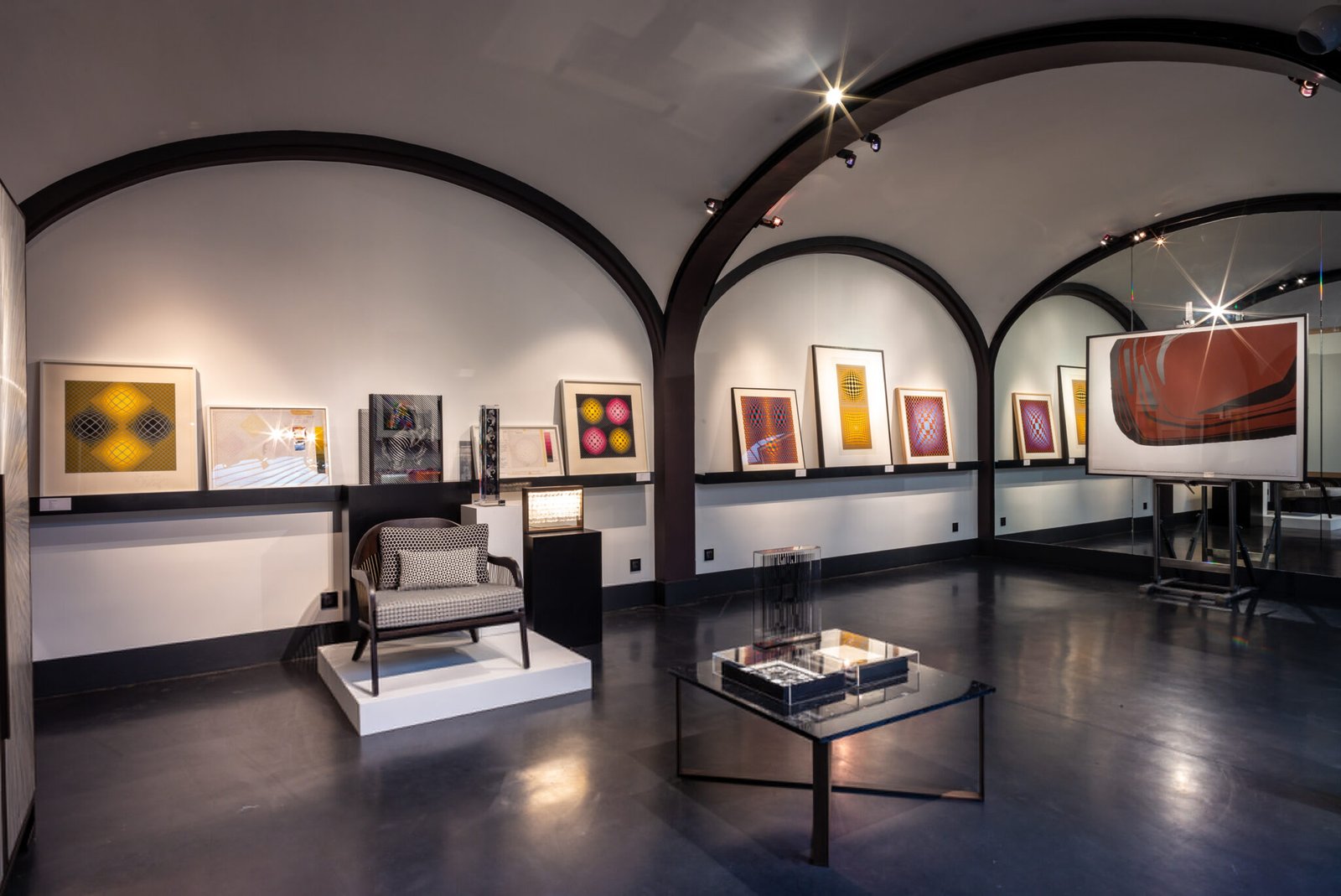
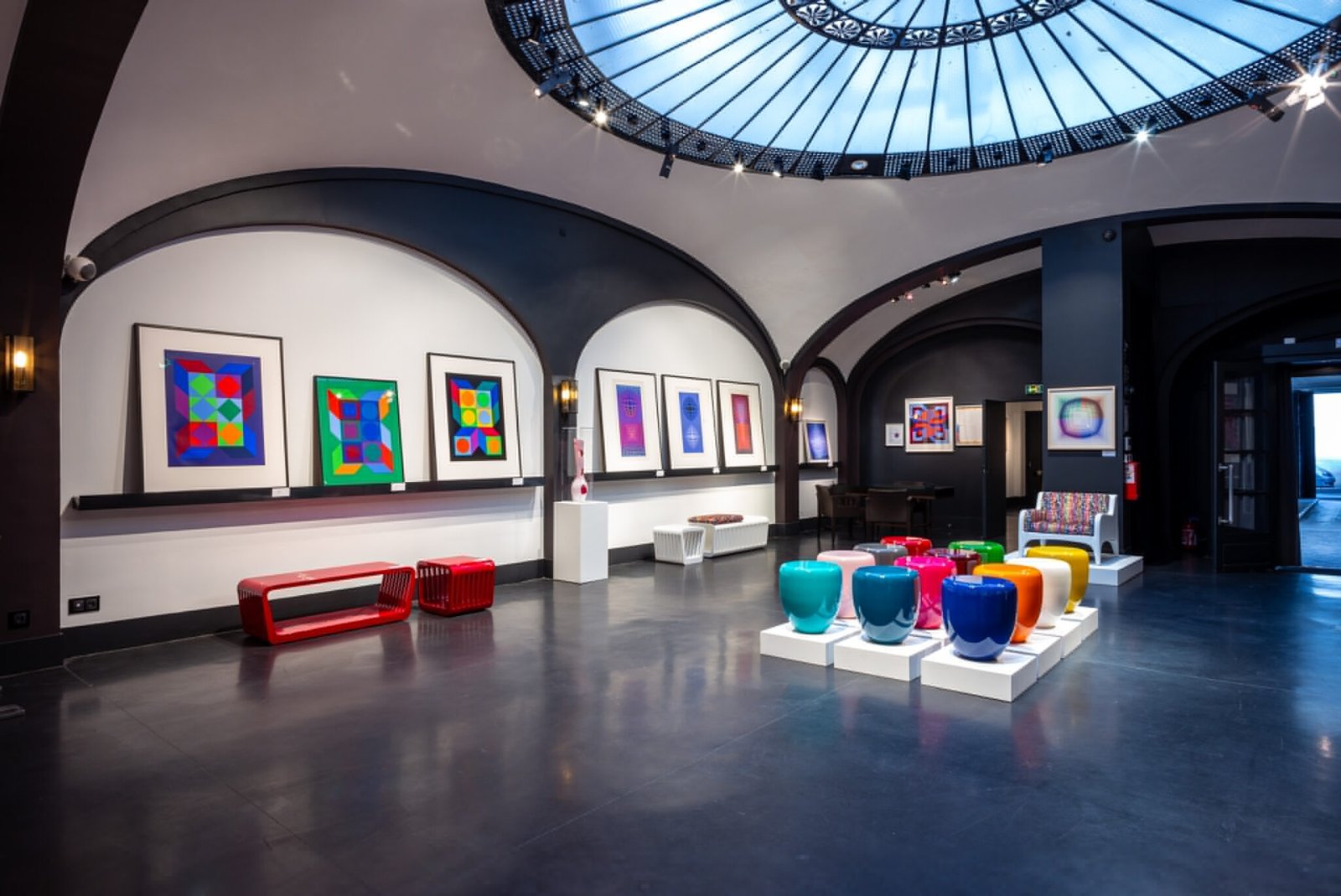
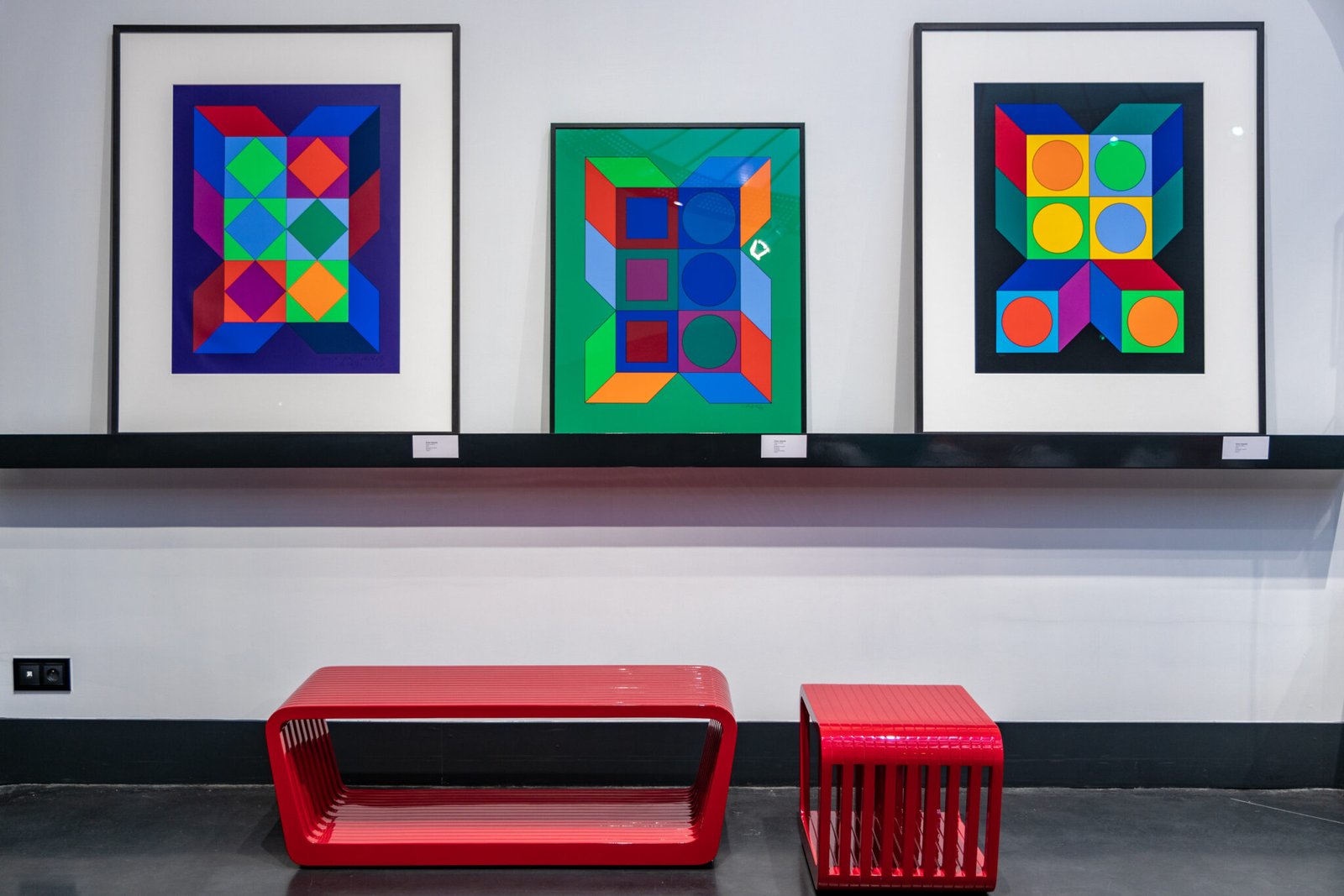
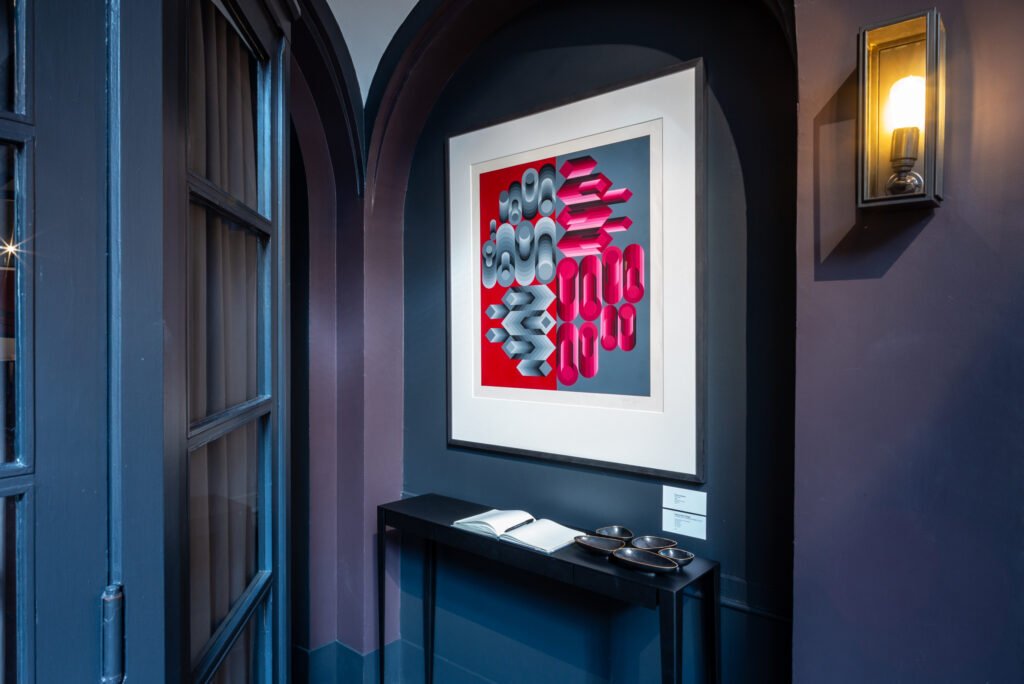
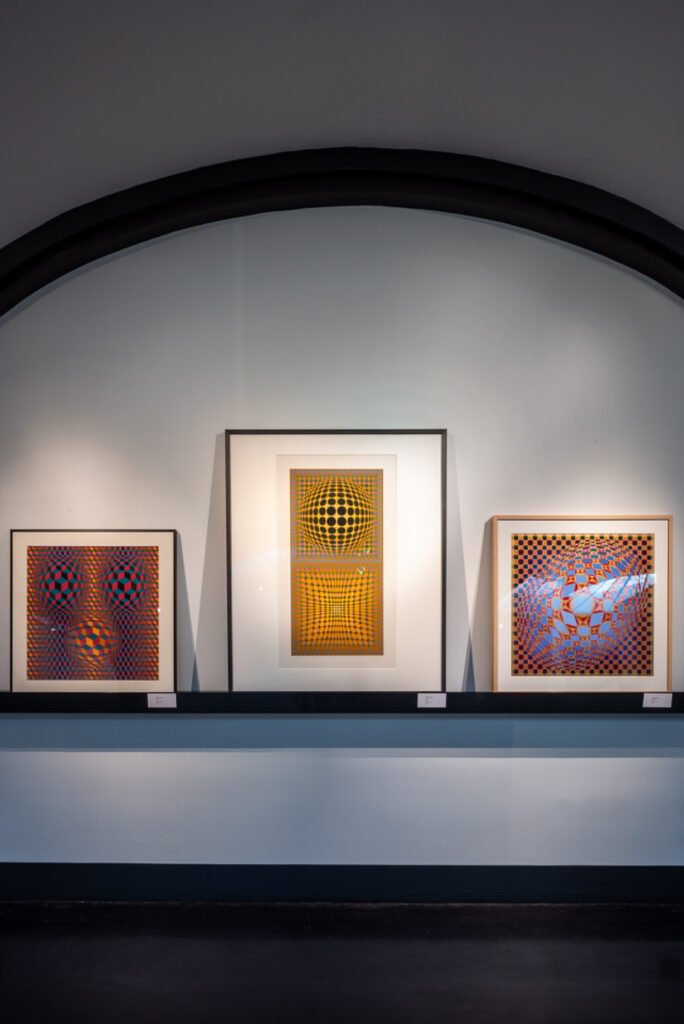
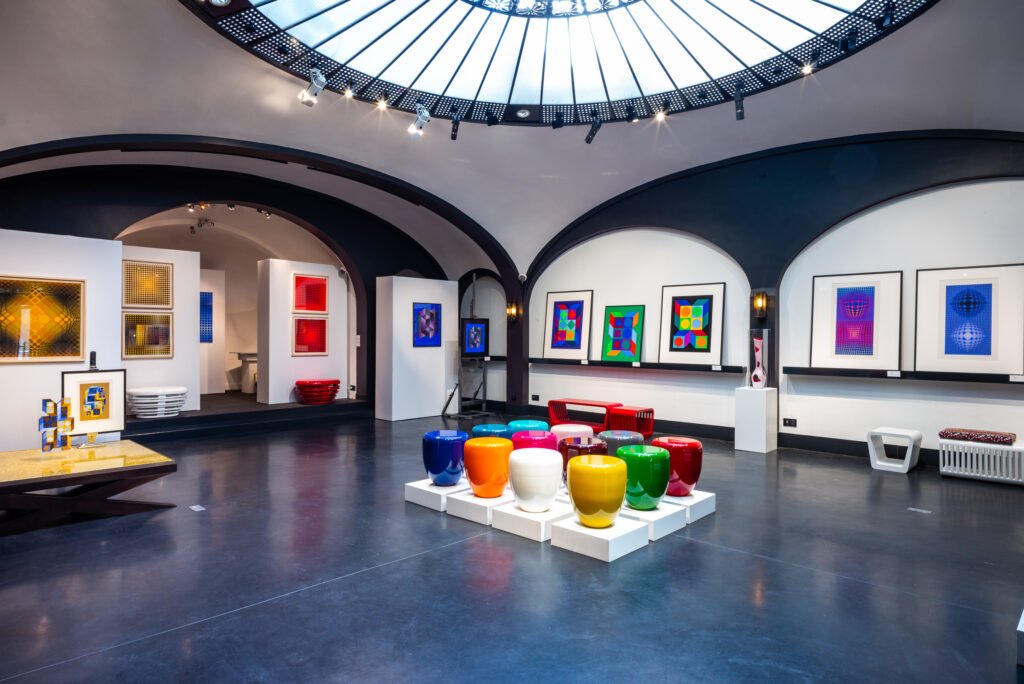
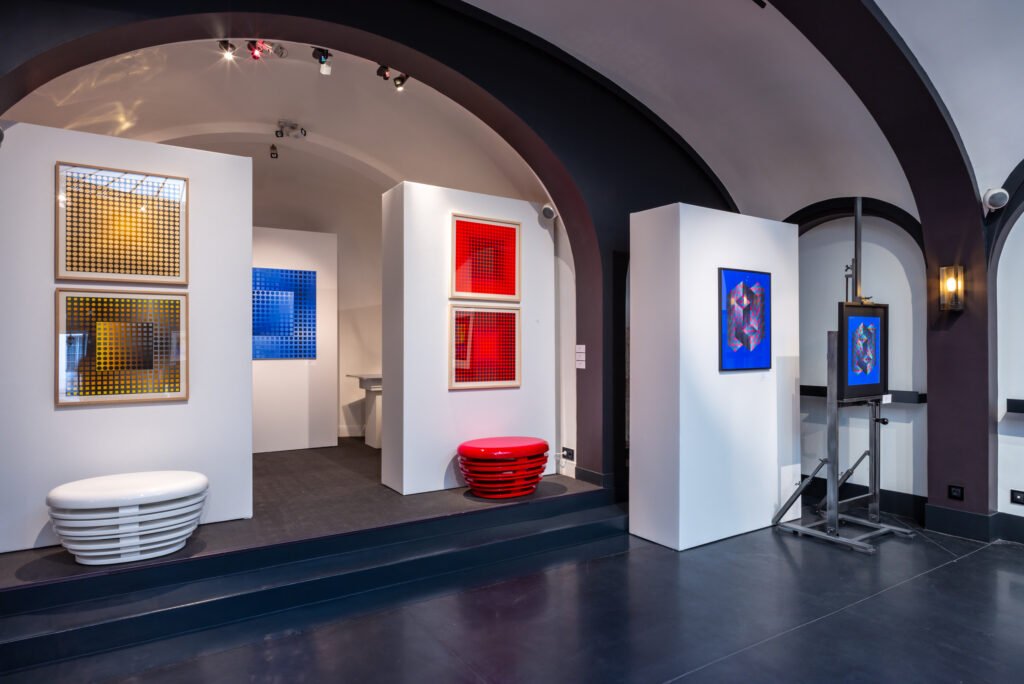
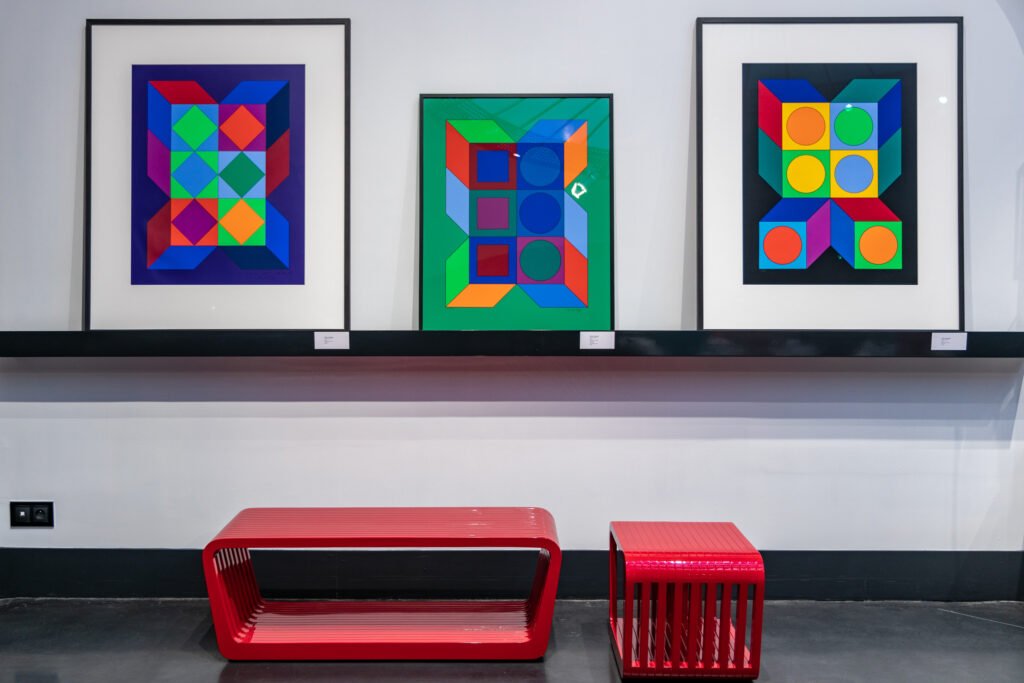
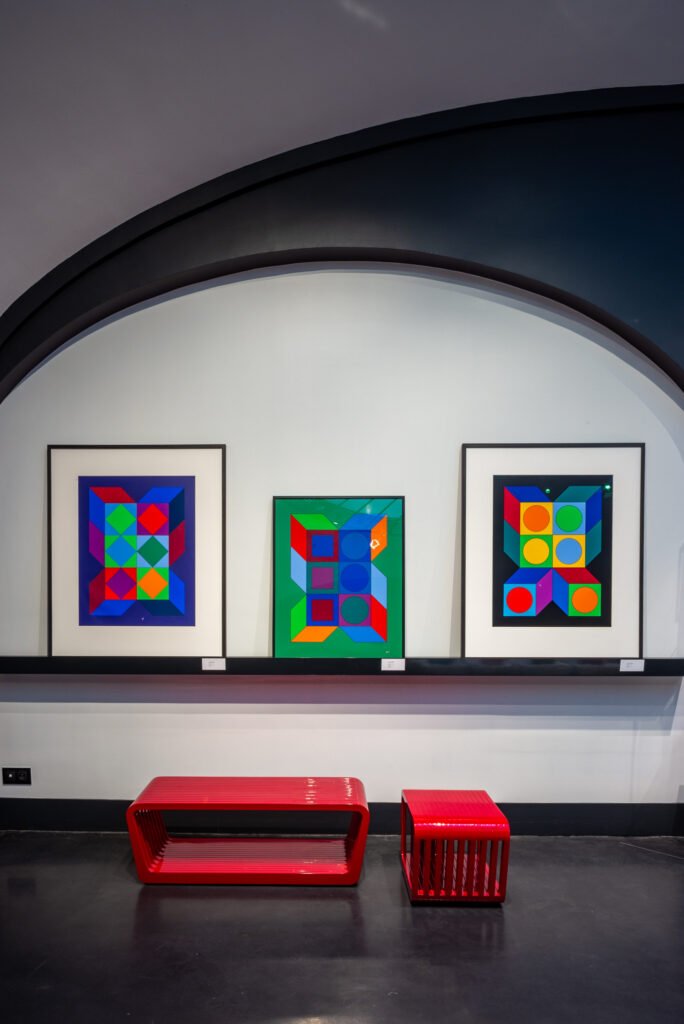
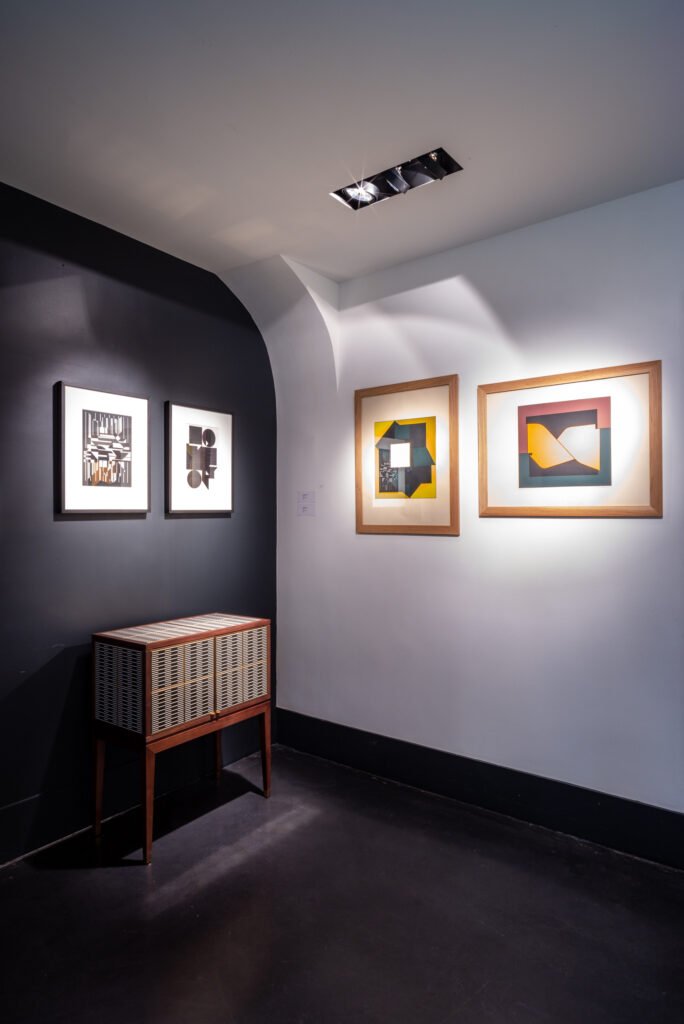
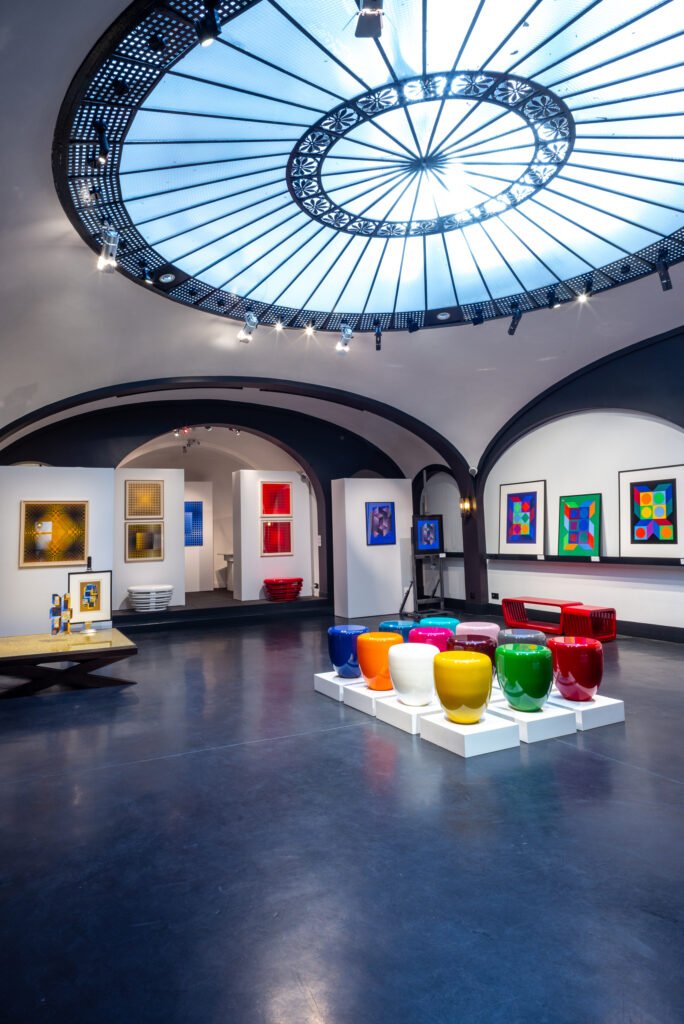
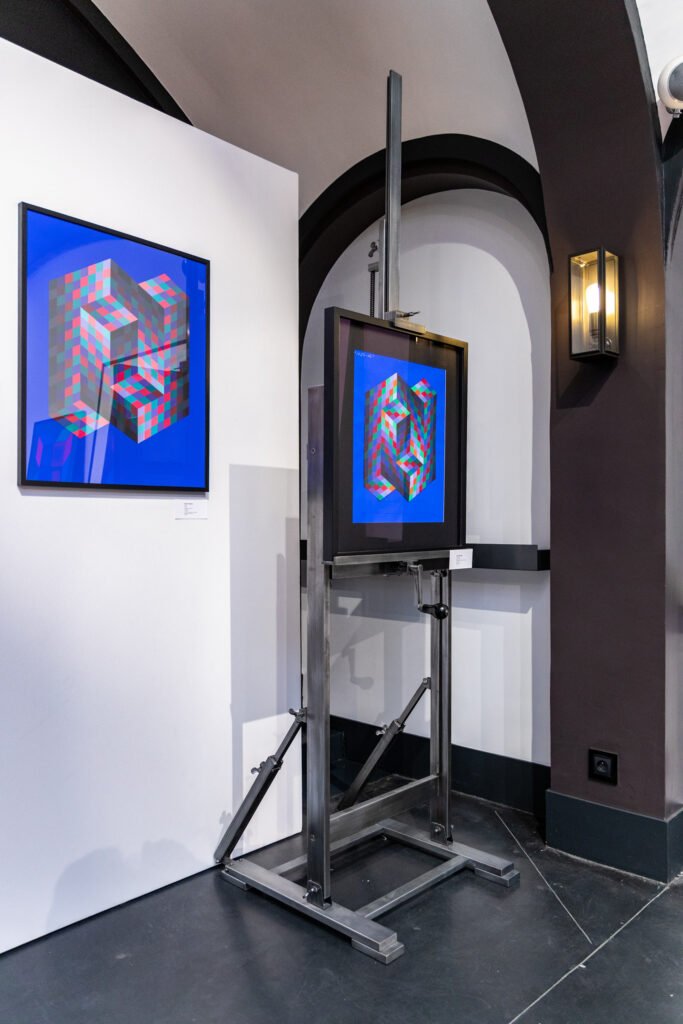
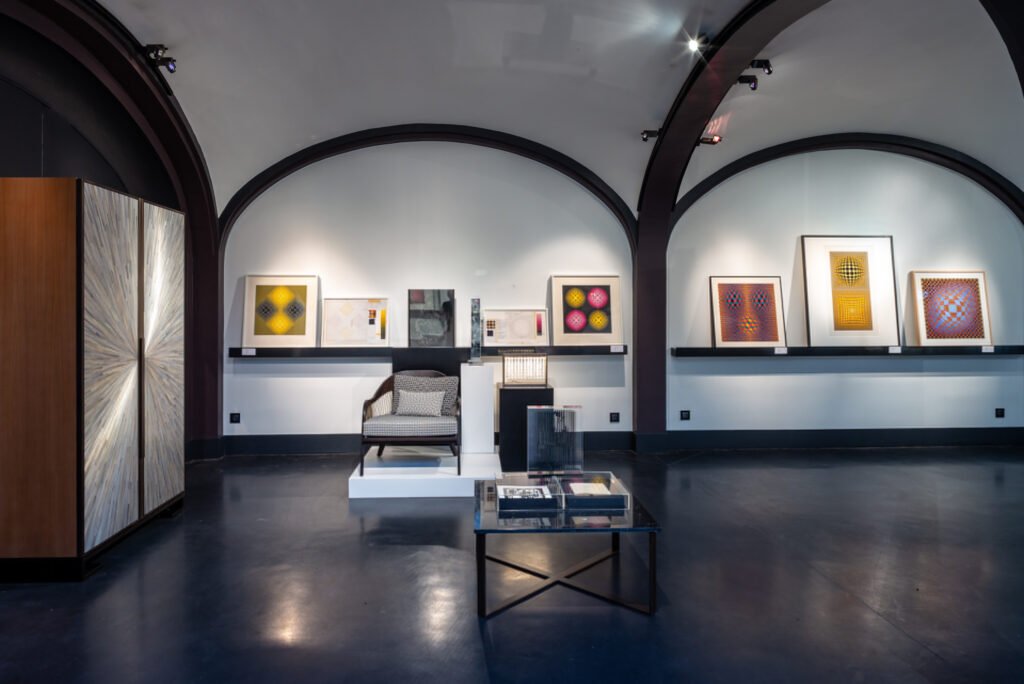
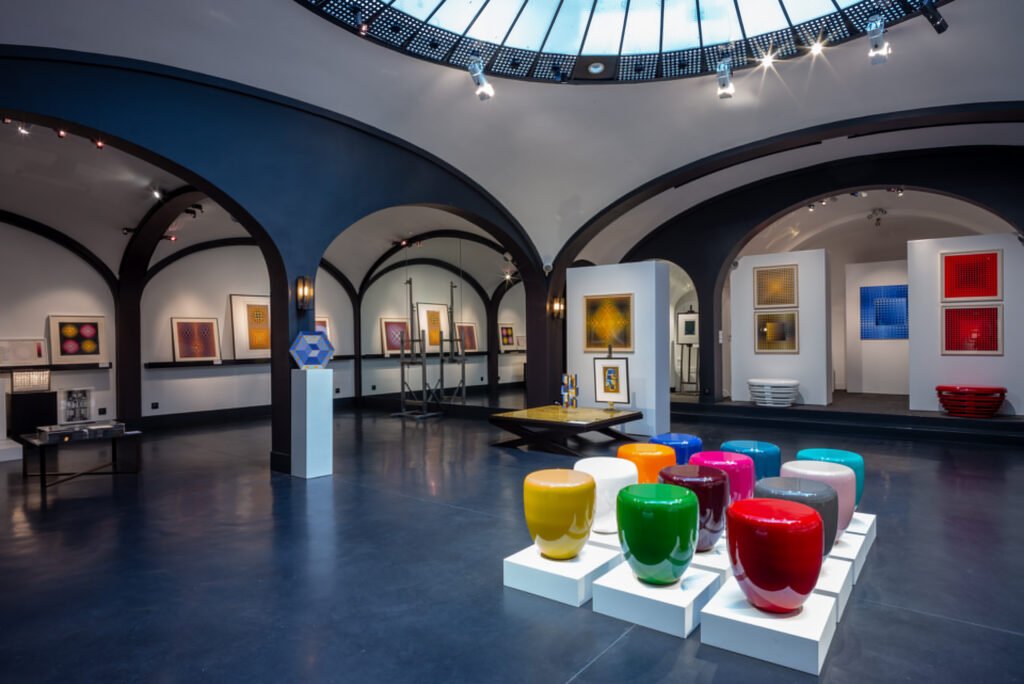
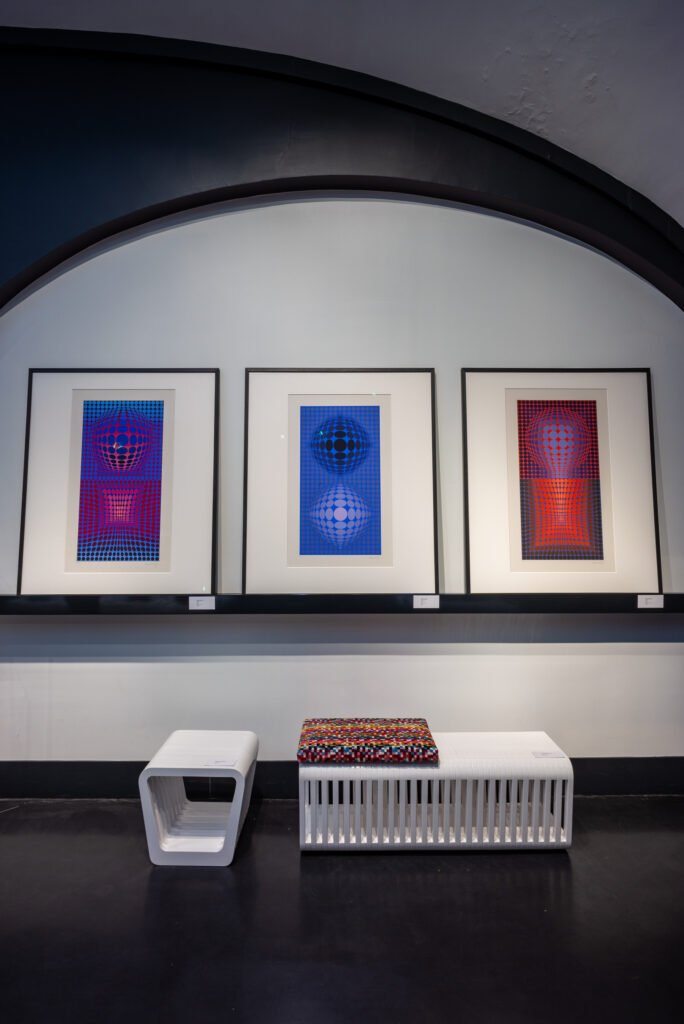
« Op Art & Design», an exhibition of the works of Victor Vasarely, founder of Optical Art. An exceptional exhibition presented by Hatchikian Gallery, bringing together Vasarely’s preparatory drawings and serigraphs created between the 1950s and 1980s, while the Centre Pompidou offered a retrospective of the artist.
Unisex vintage vinyl records by Victor Vasarely.
This exhibition, scenographed by Audrey Hatchikian, presents a rare collection of silkscreens by the artist. Of exceptional quality, the works on display date from the 1950s to the 1980s. This wide period of creation allows for the observation of all the evolutions in Victor Vasarely’s artistic practice. From silkscreens inspired by the pebbles of Belle-île-en-Mer to those structured by the influences of the tiles of the Paris metro, the exhibition is a journey through the artist’s pictorial language.
The birth of Op Art.
Research into the effects of optical sensation gradually leads to experiments with the possibilities of movement within the artistic object (kinetic art). Vasarely can be considered the leader of Op art as early as 1944, followed by artists such as Jesús-Rafael Soto, Yaacov Agam, François Morellet, Karl Gerstner, Julio Le Parc, Getulio Alviani, and Ángel Duarte. In America, Op art is presented to the public during the exhibition The Responsive Eye in New York in 1965. American artists such as Richard Anuszkiewicz, Kenneth Roland, Ellsworth Kelly, Michael Kidner, Larry Poons, Bridget Riley, joined this movement through their works and their research on the optical properties of color.
A life dedicated to artistic research.
French painter of Hungarian origin, Victor Vasarely (Pics, Hungary 1908 – Paris 1997) studied at the Muhely Academy in Budapest, a kind of Hungarian Bauhaus, under the direction of Bortnyk. In 1930, he settled in Paris and painted expressionist, cubist and surrealist canvases. He held his first exhibition at the D. René gallery in 1944, at the opening of the gallery. In 1947, in Belle-Isle, he turned to abstraction by reducing the pebbles and waves to ovoid shapes. In 1948, while staying in Gordes, he radicalized his geometric language, introducing an axonometric illusionist perspective (Santorin, 1950-51). Little by little, he moves towards kineticism; parallel lines shift, creating reliefs or hollows; the square becomes a rhombus, the round an ellipse; the interplay of movement and vibration dynamizes the composition during the «white and black» period of the mid-1950s. Starting in 1959, he develops the system of «plastic unity» and the «departure prototype» (collage printed on screen printing) to create multiples. From 1963 onwards, he approaches volume through reliefs and uses new materials such as aluminum and glass. He reintroduced color the following year, enriching his chromatic range with several shades and creating systems of preprogrammed permutations (Arny, 1967-68, Paris, MNAM). From the very beginning of his career, Vasarely surpassed easel painting by investing space (Homage to Malevich, 1954 ; Deep kinetic work in steel sheet, 1967 ; Polychromatic Signal, 1972), by creating tapestries woven in Aubusson, by creating sculptures, kinetic grids… He founded two educational museums in Gordes in 1970, in Pecs in 1976 and an architectural research center in Aix-en-Provence in 1976.
«Indeed, we cannot leave the work of art to the sole discretion of the elite of connoisseurs. The art of the present is moving towards generous forms that can be reproduced at will; the art of tomorrow will be a shared treasure or it will not be at all. Victor Vasarely. Manifeste Jaune, 1955
Rare works.
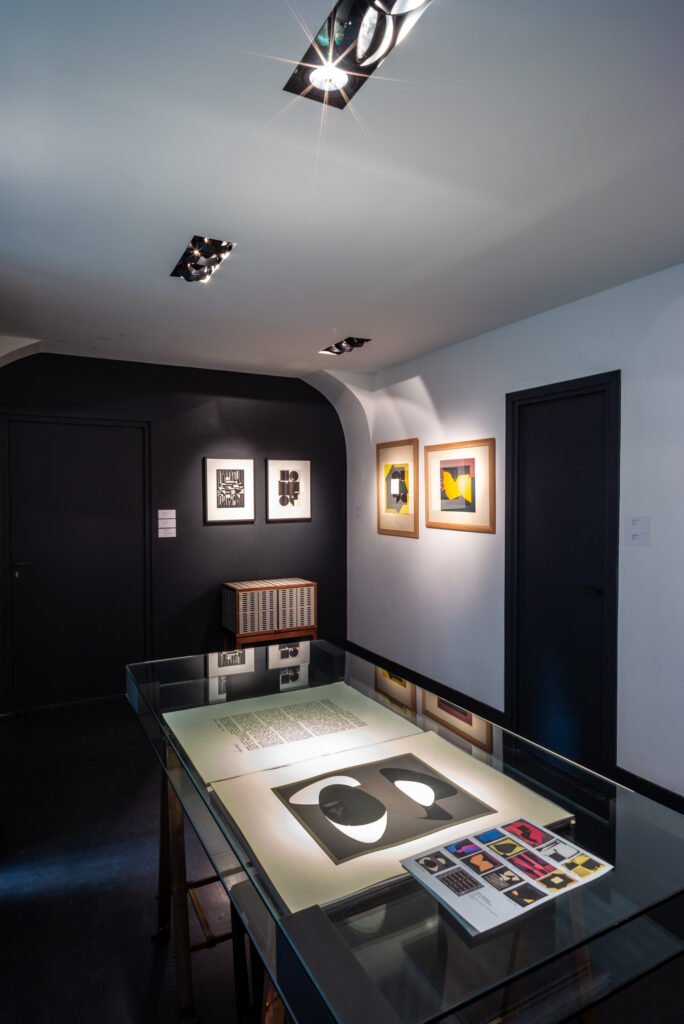
The Op Art & Design exhibition also features works of great rarity.’Album No. 1 It is one of those works. Dated from 1955, this superb album brings together 12 serigraphs dating from 1948 to 1954. Previously exhibited at the Guggenheim Museum in New York, the’Album No. 1 It is also accompanied by a remarkable text written by the artist’s hand. Three «programmes» by the artist, little known to the general public, are also to be discovered. They have the particularity of highlighting Vasarely’s method for creating his serigraphs.
Image gallery